
The Rule of Thumb
If your garage door has come off its track, stop using the opener and don't touch the cables, springs, or rollers until a technician looks at it. That's the safe default for almost every situation. The exceptions are narrow: if the door is blocking a driveway during an emergency and you absolutely must move a vehicle, or if a severe storm is bearing down and the opening needs to be covered, you may need to work around the door carefully without forcing it. Outside of those cases, the safest move is to leave the door exactly where it is.
What Actually Happens When a Door Jumps Its Track
A garage door rides on steel tracks held by rollers, with the whole weight of the door suspended and counterbalanced by torsion or extension springs under heavy tension. When a roller slips out of the track, a cable frays and lets go, or a track gets bent from an impact, the door loses its guided path. It can tilt, wedge at an angle, hang partially open, or drop suddenly if the spring system is also compromised.
Common causes include a car bumper clipping the bottom panel, a broken cable on one side pulling the door crooked, a roller that's worn out and popped loose, or a track that's been bent by someone forcing a stuck door. Humidity and heavy rain can also play a role here — wood and composite doors that swell slightly in damp weather can bind in the track, and if someone keeps hitting the opener button when the door is stuck, something eventually gives. Pine debris and grit that collects in the track through the year can also cause a roller to jump rather than roll smoothly.
How Badly It Can Go Wrong
This isn't a cosmetic problem. A standard garage door weighs somewhere between 130 and 400 pounds depending on material and size, and the springs that counterbalance it store enough energy to lift that weight on command. When a door is off track, that balance is disrupted. The door can:
- Fall suddenly if a cable, spring, or second roller fails while it's partially raised
- Swing outward at the bottom if one side is still attached and the other has released
- Snap a frayed cable under tension, which can whip with enough force to cause a serious cut or impact injury
- Crush fingers or hands if someone tries to manually push it back into alignment while it's still under spring tension
Most garage door injuries happen during exactly this kind of DIY attempt to fix or force a door that's already failed partially. The door looks like it just needs a push back into the track, but the spring tension and the damaged hardware make that push unpredictable.
What Not to Touch
- The opener button or wall switch — if the door is off track, running the opener can bend the track further, strip the gears, or yank the door into a worse position.
- The cables — a cable under tension that looks intact can still be close to failing. Don't pull on it, cut it, or try to re-seat it on the drum.
- The springs — torsion springs especially store serious force. Touching or adjusting them without the right tools is one of the most common causes of garage door injuries.
- The track itself while the door is up — trying to bend a track back into shape with the door's weight resting on it is unstable and can let the door drop.
- The door panel, if you're trying to muscle it back into position — this is the step that causes the most hand and finger injuries.
What to Do Immediately
- Stop operating the opener. If it's wired in, switch it off at the breaker so no one accidentally presses the button.
- If the door is partially open, don't walk or park underneath it. Treat the opening as off-limits until it's repaired.
- If the door is closed and just visibly crooked or off track at the bottom, leave it closed. Don't try to lift it manually.
- Look without handling anything — note which side the cable or roller looks broken on, whether the track is bent, and whether the door is sitting flush or tilted. This helps a technician diagnose faster over the phone.
- Keep kids and pets out of the garage until it's fixed.
- If a storm is moving in and the door can't be secured, use a temporary barrier like a tarp or plywood over the opening rather than trying to close the damaged door.
Why This Tends to Happen More in This Area
Ice storms are the biggest seasonal culprit — a door that's frozen or sticking slightly gets forced by an impatient opener cycle, and something in the track or roller system gives way. Heavy rain and humidity swell wood and composite doors just enough to bind them in the track, and pine needles or debris from nearby trees can work into the track and throw a roller off its path. None of these causes are dramatic on their own, but they add up over a season of use, especially on doors that haven't been inspected recently.
When to Call Hillsborough Garage Door
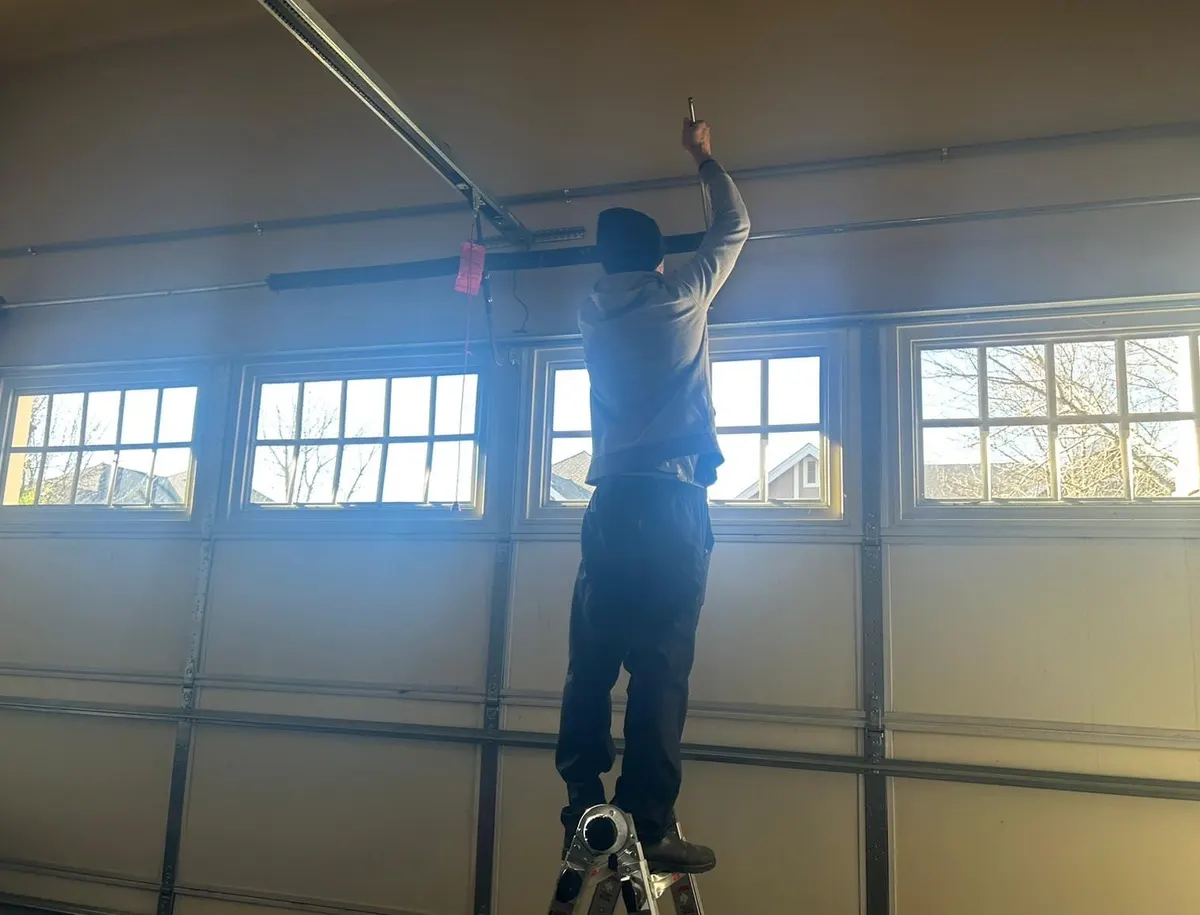
A door off its track is a same-day call, not a wait-and-see problem. Hillsborough Garage Door offers Emergency Garage Door Service for exactly this situation — a technician can assess whether it's a bent track, a failed roller, or a broken cable, and determine whether the door is safe to move at all before touching it. From there, our Garage Door Repair service covers realigning or replacing the track and rollers, and if a spring is involved, our Spring Replacement service handles that safely with the right tools and tension equipment.
If your garage door has come off its track, don't try to push it back yourself. Call Hillsborough Garage Door for fast, reliable service across Hillsborough, Durham, Mebane, Chapel Hill, Burlington, Efland, Carrboro, and Rougemont, and let us get it back on track the right way.