
What We Usually Find on These Calls
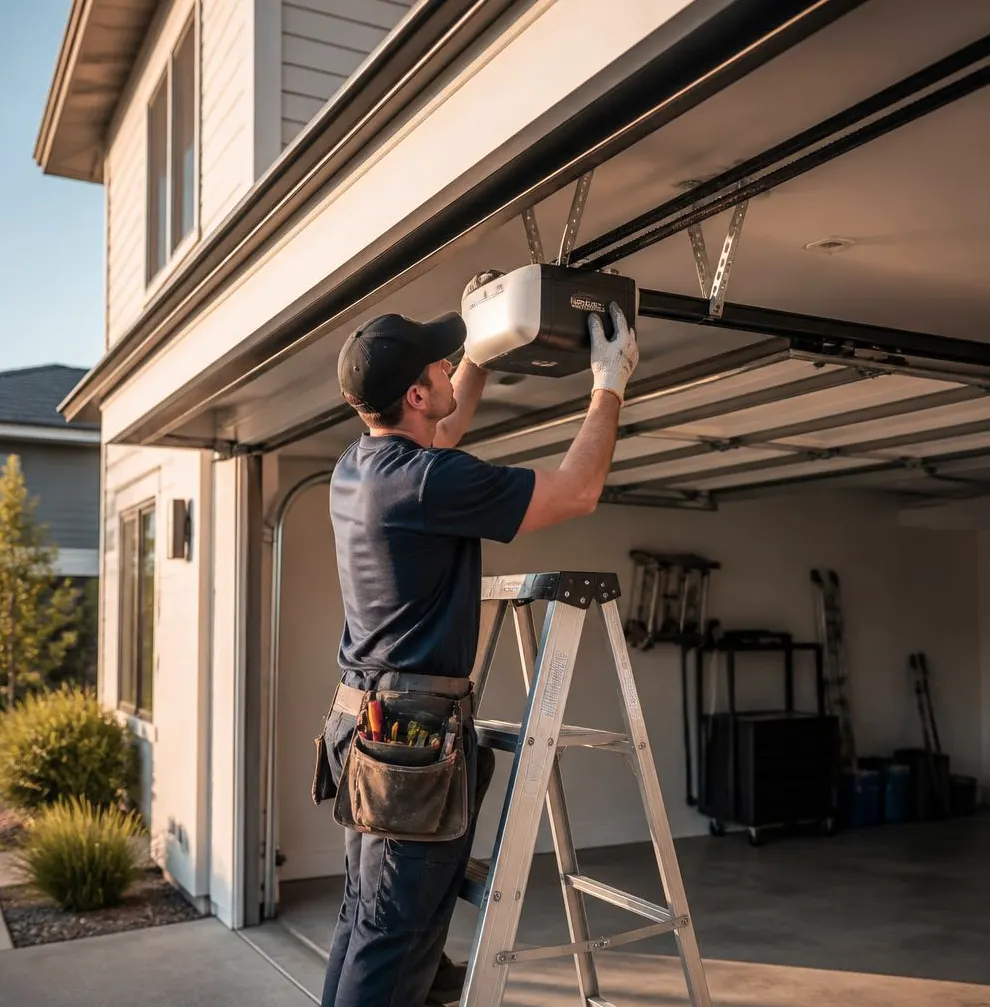
A homeowner calls us because the opener sounds like it's straining, or the door has started reversing halfway up for no clear reason. Nine times out of ten, the opener itself is fine. The real problem is a door that's out of balance and has been forcing the opener to do work it was never built to handle. By the time someone notices the symptom, the opener has often been compensating for months.
Why Balance Matters More Than People Think
A properly balanced garage door should feel almost weightless when you lift it by hand. The springs are doing nearly all the work, and the opener is just there to guide the door along the track and hold it in place. When springs weaken, rust, or lose tension — which happens faster here with our humid summers, pollen buildup, and the occasional ice storm putting extra stress on cold metal — the door gets heavier on one side or overall. The opener's motor and gears start absorbing that extra load every single time the door opens or closes.
Over weeks and months, this shows up as:
- A grinding or straining sound from the opener motor
- The door reversing on its own partway through a cycle
- A trolley or chain that seems to jump or skip
- Faster-than-normal wear on the drive gear inside the opener
- A remote or wall button that takes several presses to get a response
None of these are opener problems at their root. They're balance problems wearing the opener down.
How to Test Your Door's Balance
Tools you'll need
- A stepladder (for tall doors)
- Work gloves
- A flashlight
- Nothing else — this test does not require taking anything apart
Steps
- Close the door completely. Start from a fully closed position so you have a clean baseline.
- Disconnect the opener. Pull the red emergency release cord hanging from the trolley. This disconnects the door from the motor so you're testing the springs and hardware alone, not the opener's strength.
- Lift the door by hand. Raise it slowly to about waist height, roughly halfway.
- Let go and watch what happens. A balanced door will stay put, or drift down just slightly. If it crashes down or shoots upward, the springs are no longer doing their job correctly.
- Check the full range. Continue lifting the door to fully open and note whether it feels heavy, uneven, or like one side is working harder than the other.
- Listen and feel for resistance. Grinding, catching, or a lopsided feel usually points to a worn cable, a bent track, or a spring that's lost tension unevenly.
- Reconnect the opener by pulling the release handle again until it reengages, then test with the wall button to confirm it's reconnected properly.
What a homeowner can safely do
This entire test — disconnecting, lifting, observing, reconnecting — is safe for a homeowner to perform. It takes a few minutes and tells you immediately whether the problem lives in the springs and hardware or somewhere else.
What needs a technician
Adjusting spring tension, replacing a worn torsion or extension spring, realigning a bent track, or replacing frayed cables are not homeowner tasks. Torsion springs in particular are under extreme tension and have caused serious injuries when handled without the right tools and training. If your test shows an imbalance, the fix itself belongs to a professional.
When to Call Hillsborough Garage Door
If your door fails the balance test, or your opener has been making noise, straining, or reversing unexpectedly, that's our cue to come take a look. We handle spring replacement and garage door opener repair regularly for homes throughout Hillsborough, Durham, Mebane, Chapel Hill, Burlington, Efland, Carrboro, and Rougemont. We'll check spring tension, inspect cables and rollers for rust or wear from our humid climate, and make sure the opener isn't being asked to do a job it was never designed for.
If your garage door feels heavy, loud, or unpredictable, don't wait for the opener to fail completely. Call Hillsborough Garage Door for an honest inspection and a straightforward fix.